
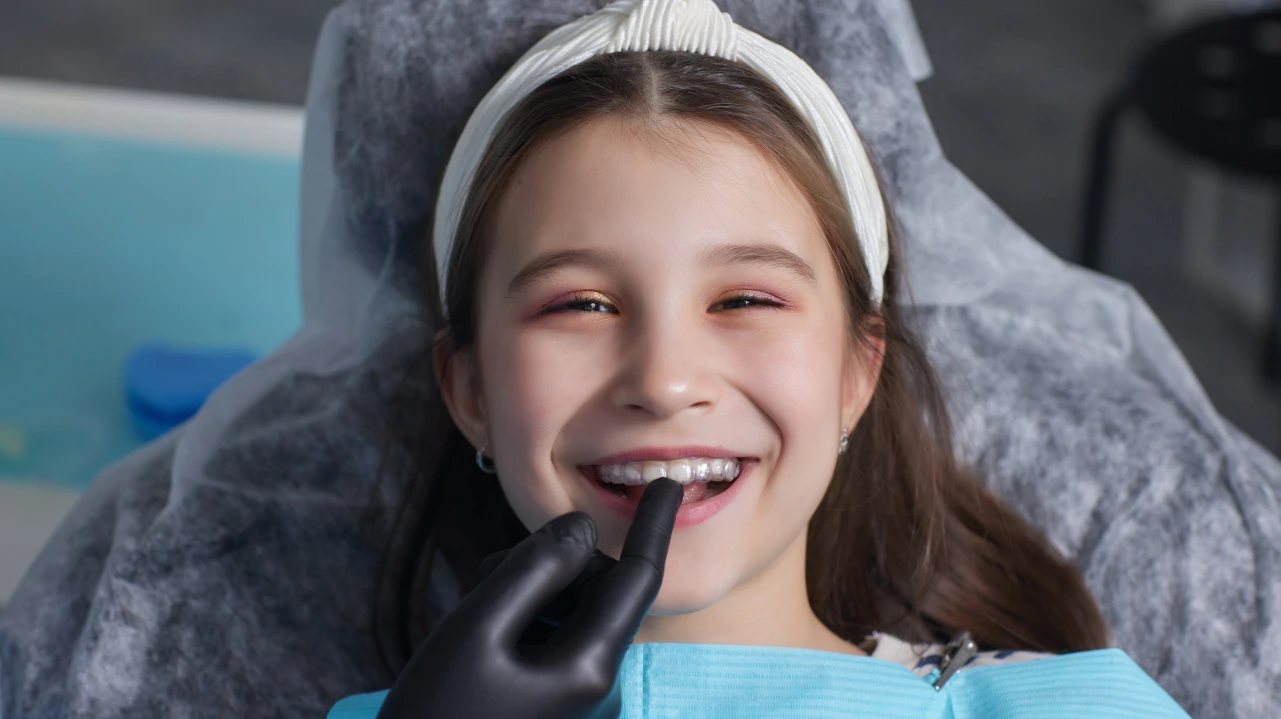
A child’s jaw is still shaping itself, which gives parents a window to act on a narrow upper jaw before it complicates the years ahead. Early orthodontic treatment uses that growing period to guide the jaw into a better fit. Parents often want to know what the process involves before deciding on a first step. This blog covers how early treatment helps narrow jaws, which appliances widen the upper jaw, the key benefits, early precautions parents can take, how an early visit unfolds and which questions parents should ask.
How Early Treatment Helps Narrow Jaws
A narrow upper jaw leaves less room for permanent teeth and can cause the upper and lower teeth to fit together unevenly. Because a child’s jaw is still growing, the palate can be widened gradually with an orthodontic appliance. This is the idea behind palatal expansion, and it is the core of early orthodontic treatment for a narrow upper jaw. As the jaw widens, teeth have more space to come in and the bite can settle into a better position.
Early orthodontics for children, sometimes called phase one orthodontics, focuses on guiding jaw growth rather than straightening every tooth. Some children need a later phase of braces or aligners, while others may not. Results vary from child to child.
Which Appliances Widen the Upper Jaw
Several orthodontic options can address a narrow palate, and the choice depends on the child’s age, jaw growth and bite. The options below are the ones most often used, and the right plan is set after an evaluation.
Palate Expanders
A palate expander for a child is a small appliance fitted across the roof of the mouth. It is adjusted in small steps, which gradually widens the upper jaw. Details vary by appliance, but most expanders stay in place for a set period and then hold the new width while it settles.
Early Braces
Partial braces on a few permanent teeth can guide teeth into position alongside an expander. Crossbite treatment for a child often combines jaw expansion with this kind of tooth movement. Early braces are used for a limited time, and full braces or aligners may follow later if needed.
Retainers After Expansion
Once the jaw is widened, a retainer or the expander itself holds the new width while bone and tissue adapt. Following the retention plan helps keep the result in place.
Key Benefits of Early Treatment
Early treatment works with a child’s natural growth, which is why timing matters. The benefits below are possible, and the extent varies from child to child.
- Create more room for permanent teeth that would otherwise come in crowded.
- Correct a crossbite so the upper and lower teeth meet more evenly.
- Guide jaw growth toward a more balanced fit between the upper and lower jaw.
- Support a more comfortable, better-aligned bite while the child is growing.
- Reduce the complexity of later braces or aligners in some children.
Early Precautions Parents Can Take
Early attention gives more options, so a few simple steps help. Parents can schedule an orthodontic evaluation around age 7, the age commonly recommended by orthodontic organizations for a first check, even if the teeth look straight. Keeping up with regular dental visits also lets changes in the jaw and bite be noticed over time.
Habits are worth watching as well. Prolonged thumb sucking, pacifier use past the toddler years and regular mouth breathing may influence how the jaw and teeth develop, so mention them to your child’s dentist early. A bite that looks off, crowded teeth or trouble chewing are also worth raising at the next visit.
How an Early Visit Unfolds
An early orthodontic visit follows three steps, and most of it is looking, listening and planning.
Initial Exam
Your child’s teeth, bite and jaw are examined, and you can share your concerns and any habits you have noticed. Questions about timing and jaw growth are welcome at this stage.
X-Rays and Records
X-rays and photos may be taken to show the jaw, the permanent teeth that have not yet come in and how the bite fits together. These records help plan treatment and track changes over time.
Treatment Plan
You then hear whether to begin early treatment, start with a wait-and-watch approach or return for a later phase. Appliance options, how long one would be worn and what follow-up visits involve are explained so you know what to expect.
Which Questions Parents Should Ask
Asking a few direct questions before treatment begins helps you understand the plan. Clear answers also make it easier to feel confident in the next step.
- Ask why early treatment is recommended now and what it is meant to correct.
- Ask which appliance is planned and how long your child will wear it.
- Ask what follow-up visits involve and how progress will be tracked.
- Ask whether a later phase of braces or aligners is likely.
Get Your Child’s Jaw and Bite Checked at Children’s Dentistry of Texas in Richmond, TX
Children’s Dentistry of Texas in Richmond, TX offers orthodontics for kids, including care for crowding, misalignment and bite issues. Schedule a visit to have your child’s jaw and bite checked and find out whether early treatment is the right next step.
Frequently Asked Questions
What happens after an early orthodontic phase is completed?
A retainer or the expander holds the new jaw width while growth continues, and regular checkups track how the remaining teeth come in. A later phase of treatment may or may not be needed.
Does a palate expander hurt or make eating difficult?
Many children feel pressure or tightness for a few days after each adjustment, and chewing may feel different at first. Soft foods help during that time. Mention any ongoing discomfort at your next visit.
How long does early orthodontic treatment last?
Length depends on the appliance and the child’s growth, and early phases often last several months with a holding period afterward. Children’s Dentistry of Texas can explain the expected timeline once your child is evaluated.
Can a narrow upper jaw correct itself?
A narrow upper jaw does not always improve on its own as a child grows, and some children are monitored before treatment begins. An orthodontic evaluation can show whether to treat now or wait.
How should a child care for an expander?
Brush around the appliance twice a day, rinse after meals and avoid sticky or hard foods that can loosen it. Tell your orthodontist if the appliance feels loose or irritates the cheek or tongue.